Boston Already Knows Fish. Avra Bets Otherwise
Posted by estiator at 15 August, at 17 : 27 PM Print
COVER STORY
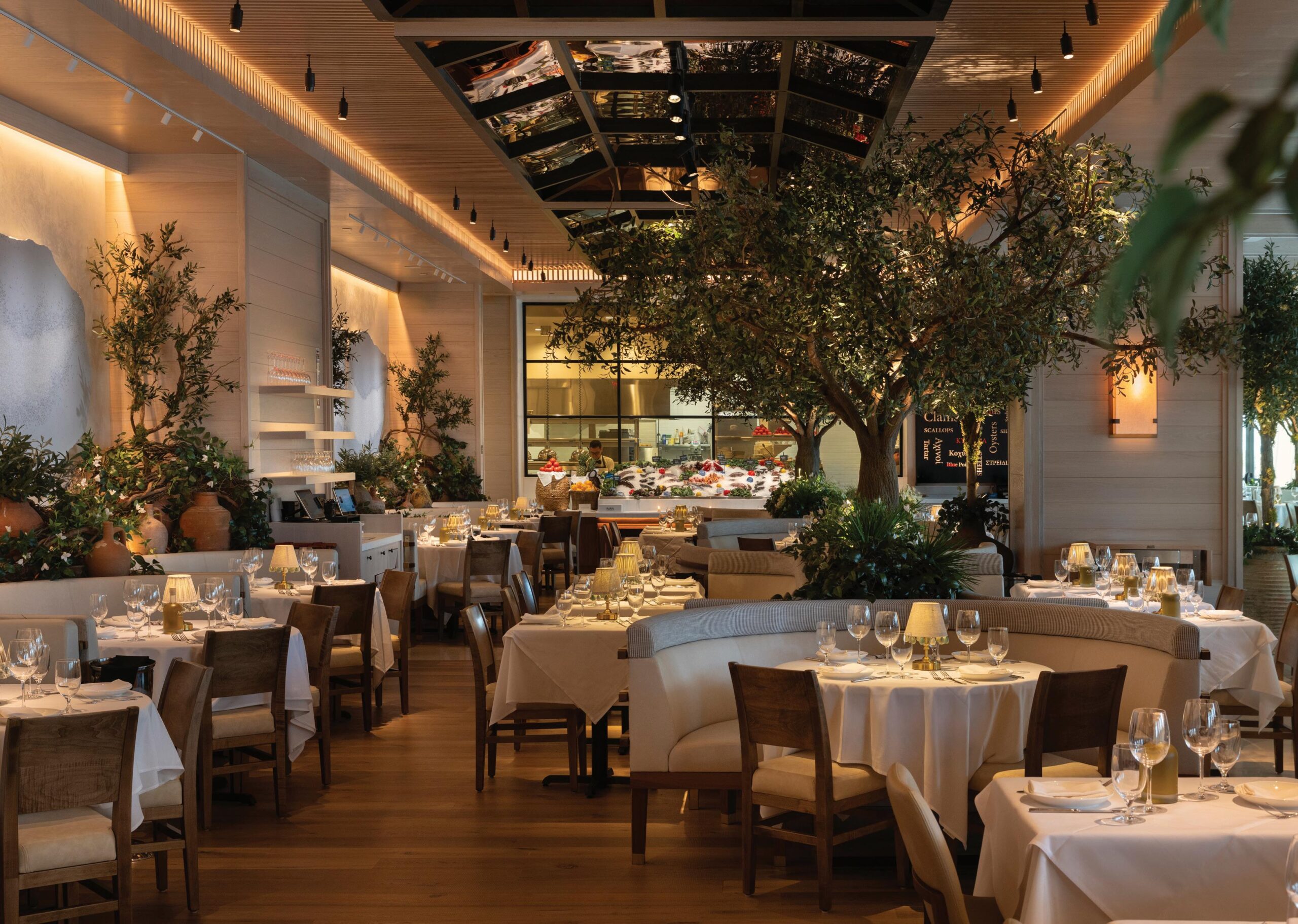
This spring, Avra Group opened its first New England location in Boston’s Back Bay, the brand’s eighth restaurant overall. Owner Nick Tsoulos on why now, and why here. By Theodora Tsevas
Boston is a great seafood city; everyone knows that. Everyone knows where to get a “wicked-good” clam chowder, a “lobstah” roll, or a “pissa” white haddock. Boston is a city that has built its whole identity around what comes out of the water a few miles offshore, and it doesn’t take kindly to imitators.
But does a city this confident in its own seafood have room for a Greek restaurant like Avra? That’s exactly the bet Nick Tsoulos and his partners are making with the opening of Avra restaurant in Back Bay, the first Avra Group restaurant in Boston, and the first fine-dining seafood concept of its kind the city has ever seen.
“There are great Greek restaurants in Boston,” Tsoulos says. “Just no Greek fish restaurant there like we do it.” New England has no shortage of Greek restaurants, and Boston Harbor has no shortage of seafood houses. But there has never been the two together, done the way Avra does it: whole fish flown in from the Mediterranean, grilled simply, priced by the pound, and served in a room built to feel like a Greek island rather than a themed taverna. For Tsoulos, that gap in the market is the whole point.
A Concept Born on the Docks of Nafpaktos
Avra was not born in a boardroom but on the waters of Greece. Tsoulos grew up in Nafpaktos, a fishing town on the Gulf of Corinth, where choosing your catch was simply how his family ate. That memory is a specific one: fishing with his father and uncles for fagri, dorado, octopus, and red mullet, then grilling the catch over charcoal, or slicing it thin and dressing it simply with olive oil from the family farm, lemon, and salt. Dinner came with salads from the garden and spinach pies his grandmother made. That memory became the DNA of Avra.
Translating that intimacy into a 250-seat dining room in Manhattan, and now Boston, is not a small leap. But Tsoulos says the concept didn’t arrive fully formed at that scale. Before Avra, he and his team ran Trata Estiatorio on the Upper East Side, a 90-seat restaurant where they first tested the idea of Greek seafood done at a fine-dining level. It was there that Tsoulos met his partners, and they saw the opportunity to go bigger.
Avra opened in New York in 2000. “New York had just started with Greek seafood restaurants,” Tsoulos says. “Other Greek restaurants had been open for a couple of years. We saw there was room for more.”
What’s notable about Avra’s trajectory is how long the group waited before expanding. Sixteen years passed between the original New York location and the second Avra. Tsoulos is candid about why: the difficulty of growing a business, partnerships evolving, and the need to get the menu exactly right before scaling it.
“We were going through some growing pains with Avra,” he says. “When we perfected the menu, my partner had another restaurant group, sold it, and came to me and said, ‘Let’s expand Avra.’”
What followed was a run of openings: Madison Avenue, Beverly Hills, Rockefeller Center, a location outside Miami, and, in just the past year, Dallas, a third New York location near Hudson Yards, and now Boston.
Why Boston, Why Now?
Tsoulos has called Boston “a big fish town,” and he means it as an observation about the city’s dining culture, not just its coastline. Massachusetts already has a wide range of Greek restaurants, upscale spots, tavernas, souvlaki counters, and family-run institutions that have fed the diaspora for generations. What it has never had, he points out, is a Greek fish restaurant built at Avra’s scale and style. And the city itself has been changing around that gap.
“The restaurant scene has changed in Boston over the past few years,” he says. “You have these restaurant groups coming. We thought it was the right fit for us.”
That instinct played out down to the block. The group actually scouted the Seaport first before settling on Back Bay. “Different location, different vibe,” he says. Back Bay’s mix of luxury retail, foot traffic, and an audience that already understands white-tablecloth dining made it a more natural home for the brand than a neighborhood still finding its identity.
Ask Tsoulos how Avra positions itself against Boston’s beloved seafood shacks and raw bars, and he doesn’t hesitate: This isn’t competition, it’s a different category altogether.
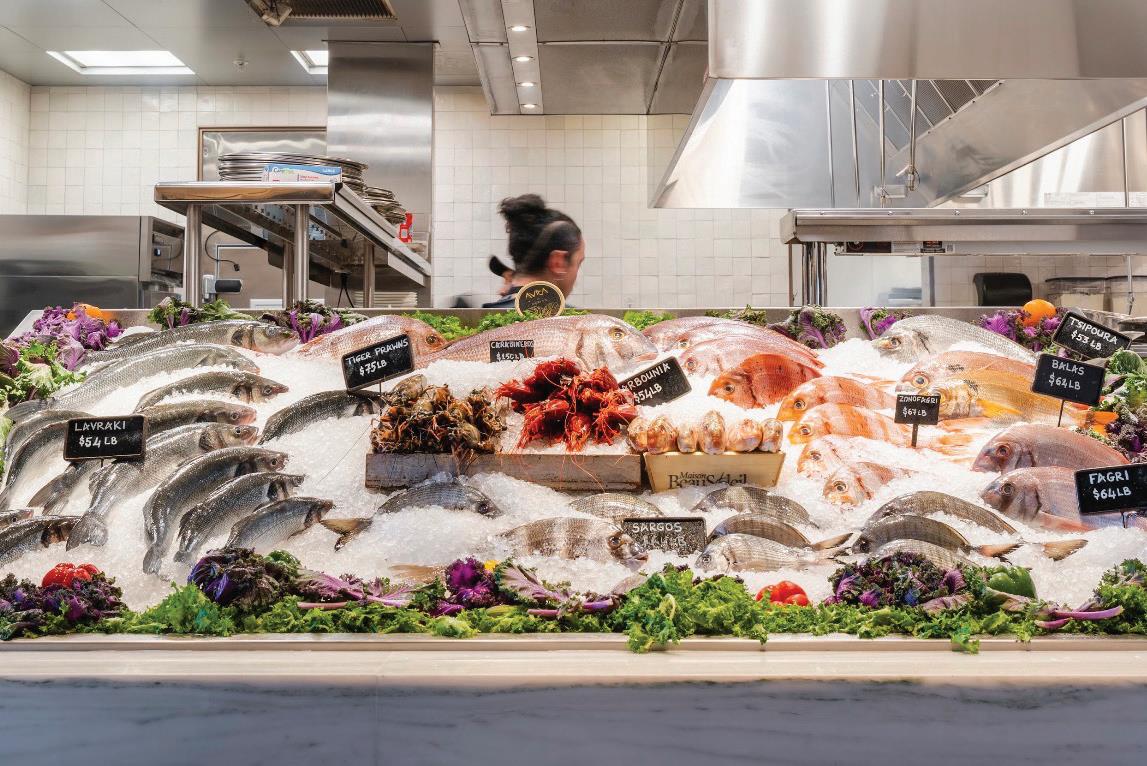
“It is entirely different,” he says. “The fish we bring is from the Mediterranean. Other seafood restaurants have local fish. We import the fish; if they catch it today, tomorrow it’s in Boston.”
Avra Group maintains its own sourcing offices in Spain, Portugal, and Greece to make that possible, flying in whole fish rather than relying on domestic catch. That distinction matters more in Boston than perhaps anywhere else Avra has opened. This is a city with its own deep, proud seafood identity. Tsoulos isn’t trying to out-Boston Boston. He’s introducing an entirely separate tradition and letting diners decide whether they want both.
A Crowded Table
Seafood is one thing, though, and Greek cuisine is another. Boston already has one of the most dense, well-established Greek dining scenes in the country, spanning everything from casual tavernas to ambitious modern kitchens, and it’s a fair question whether that market is oversaturated, and whether there’s really room for one more Greek restaurant, however upscale. Tsoulos believes that the market is not saturated yet.
“Our food is based on the Mediterranean diet. You can eat this food every day,” he says. “I do not open ethnic restaurants with flags, statues, that kind of thing. I have a different environment at the restaurant, and the menu says it all.”
Tsoulos isn’t positioning Avra as a Greek restaurant competing with other Greek restaurants for the same diaspora clientele. He’s positioning it as a seafood-forward, Mediterranean-diet restaurant that happens to be Greek, closer, in his mind, to a category built around health and lifestyle than one built around heritage dining.
And then there’s the elephant in the room: Milos restaurants, Avra’s longtime rival brand, has also confirmed plans to open in Boston. For most restaurateurs, an opening rival landing in the same city might sound like a threat. Tsoulos treats it as something that naturally happens.
“We open where he opens, and he opens where we open. It’s business,” he says.
Tsoulos has seen this before, when they were both operating in New York. “New York is a different world every three blocks,” he says, describing how each Avra location, from the original location to the third restaurant that opened recently, developed its own clientele almost independently of what any competitor was doing a few blocks away. More Greek restaurants opening, in his view, hasn’t diluted the category; it’s expanded it. “Everybody does their thing, and they have their clientele.”
If the location and positioning took years to settle, the menu took even longer. Tsoulos says it was roughly a decade of refinement, testing different chefs and adjusting techniques, before Avra’s menu became what it is today.
“We knew what we wanted because we know Greek food,” he says. “I grew up with Greek food.”
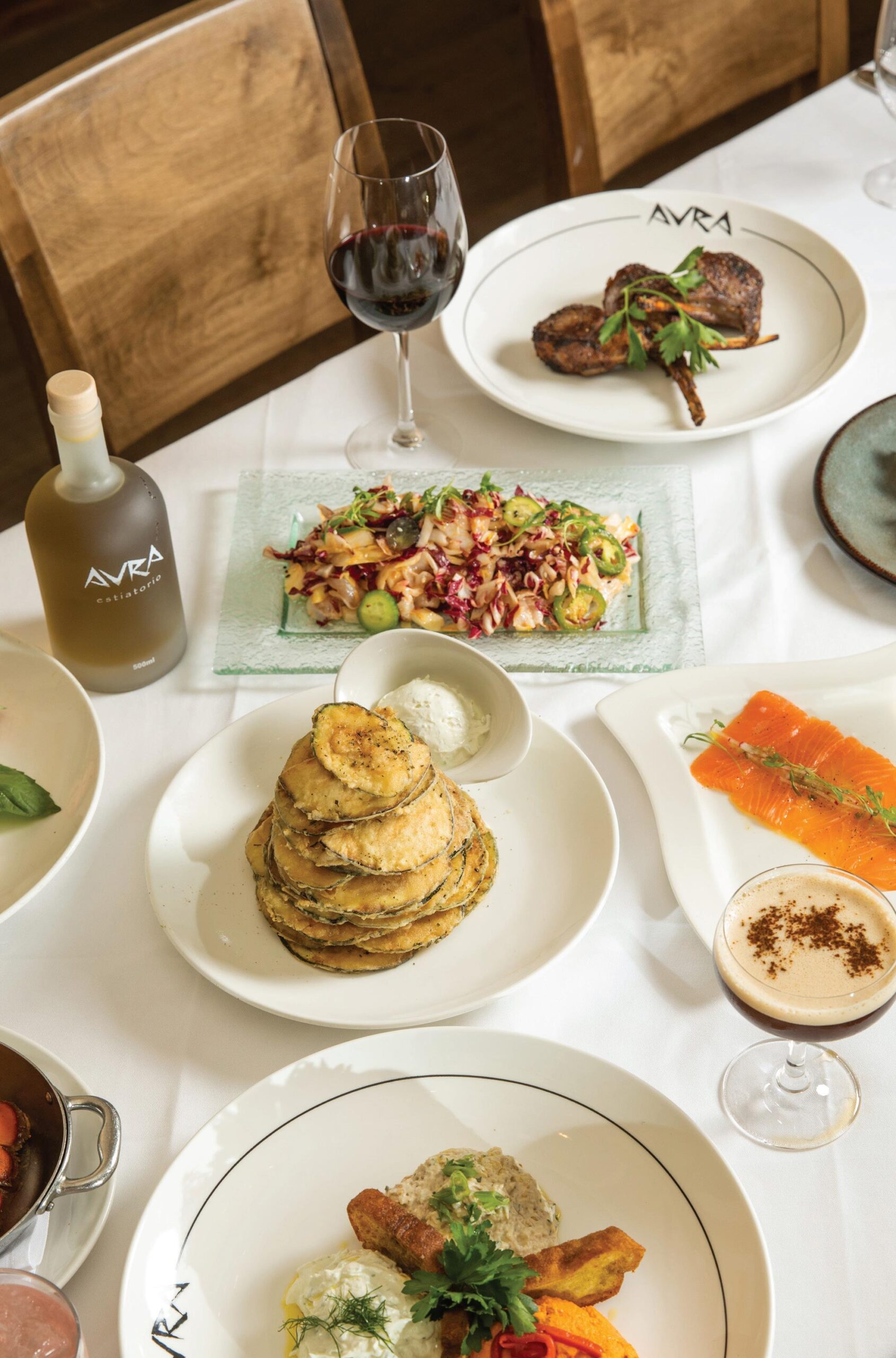
The result is a menu built around simplicity: whole fish grilled with olive oil, lemon, and oregano, priced by weight, alongside classic Greek starters. It’s a format that rewards diners willing to be a little adventurous.
“They love the food,” Tsoulos says. “It’s clean food; maybe they don’t understand the fish at first. They might order a salmon the first time, but next time they’ll try a different fish like fagri, or a lithrini.”
One dish in particular tends to convert the skeptics: branzino, known in Greek as lavraki. “It’s one of our favorite dishes,” Tsoulos says, and one of the restaurant’s most consistent sellers across every market it operates in.
Running an operation that flies in fresh whole fish daily raises obvious questions about waste. Tsoulos says the volume itself is the solution: Avra’s restaurants are busy enough, and staffed heavily enough, that very little goes unused.
“We try not to waste food, because we have a big group of staff in every location and we, of course, give them food too,” he says. “There’s no food waste, because the restaurants are very busy, and whatever is leftover is a staff meal.”
On sourcing, the group draws a clear line between produce and protein. Local Massachusetts produce is used wherever it’s viable. “Produce we try to get local,” Tsoulos says. “Everything else, there isn’t a lot of local stuff, but whatever you can get local, we get.”
Having now opened across New York, Dallas, Miami, and Beverly Hills before landing in Boston, Tsoulos has a clear sense of how audiences differ by city, and in Boston’s case, the brand recognition is already doing a lot of the work.
“Most of the Greek people know the brand,” he says. “For the rest, the first time they come in, they try it, but my customer knows the brand. It’s not new to them.”
For a concept making its Boston debut, that built-in familiarity, carried over from other American markets, gives Avra a running start that most new restaurants in the city don’t get.
What’s Next for Avra Group?
Tsoulos is already looking ahead to what’s next: Brickell in Miami, Las Vegas, Southern California, and also expanding outside of the United States. There are plans to open in the Bahamas, and there are also early talks in the Middle East, Dubai among them.
“We are building a brand,” he says simply.
One market conspicuously absent from that list: Greece itself. Tsoulos is unusually direct about why.
“It’s not a good clientele; we look at volume restaurants,” he says. It’s not that Greeks won’t appreciate Greek seafood, but the audience is different. “Greece has a lot of great restaurants, but the price point is different than ours. You have the taverna there. Most Greeks don’t look at the ambience or the experience; they look at the food. It’s a little challenging for us.”
The real obstacle, as he describes it, isn’t regulation or rent or even competition from other fine-dining groups; it’s the taverna itself in Greece. In every American market Avra has entered, the brand has been able to define its own category: there was no local institution serving whole grilled fish by the kilo, in a room built for a special occasion, at a price point people expected to pay for that kind of night out. In Greece, that institution already exists, in nearly every neighborhood, island, and village, and it has a century’s worth of trust behind it.
A taverna owner doesn’t need to sell the experience, the fish, the setting, the family running it for two generations; that’s simply what a taverna is, at a fraction of what Avra would need to charge to sustain its model. Going head-to-head with that, on a Greek territory, is a different fight than opening in Dallas or Las Vegas.
He stops short of ruling it out entirely, but his hesitation is telling from a restaurateur who has otherwise expanded with confidence into some of the most competitive dining markets in the world.
“I won’t say yes or no. But still, I can’t compete with the Greek taverna. It’s tough.”
It’s a rare moment of hesitation from someone who has otherwise never blinked at a new market, Boston included. His entire business model has been proving skeptics wrong: first in Manhattan in 2000, and now in a city that already thought it knew everything about seafood.
Tsoulos’s ambitions for Boston remain, in the end, simple. “We want people to come and enjoy Greek food,” he says. “We are building up the Mediterranean diet, and people should try it more often.”
For a city that already knows its clam chowder and its lobster roll by heart, Avra is betting that there’s still room on the table for lavraki.
Avra
400 Newbury St.
Boston, MA 02115