Selene by Kyma
Posted by estiator at 15 February, at 19 : 40 PM Print
RESTAURANT SPOTLIGHT
Selene by
Kyma
The next evolution of Greek dining arrives in SoHo this spring. By Theodora Tsevas
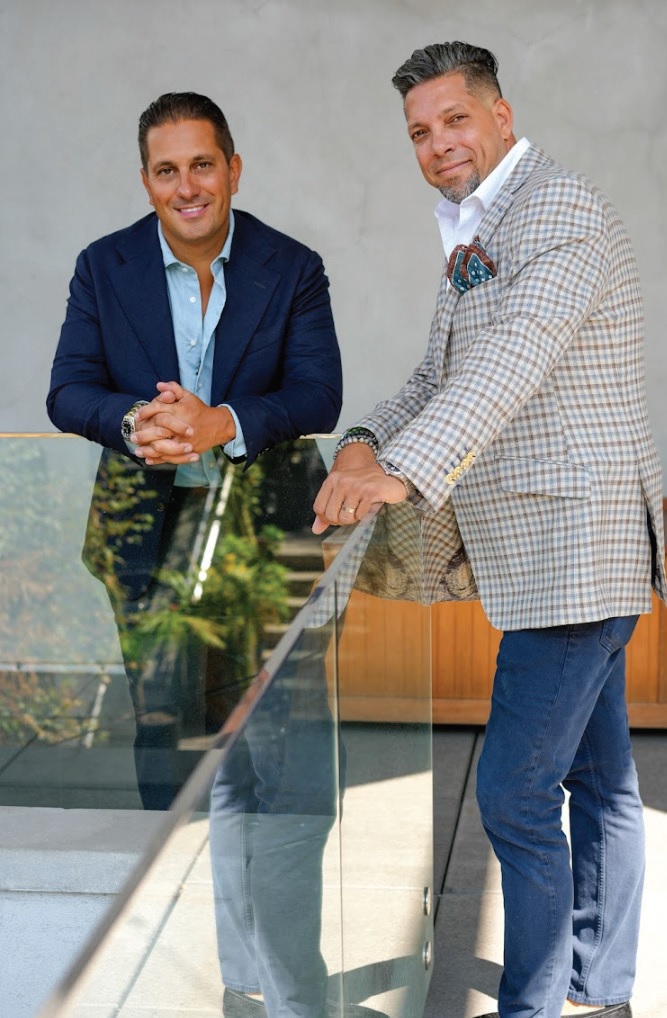
When Reno Christou and James Ragonese secured a sculptural space at 23 Grand Street in SoHo, they faced a fundamental question: Have Greek restaurants in New York done enough? Their answer arrives in early spring as Selene by Kyma, a deliberate departure from everything that came before. “We’re evolving what Greek restaurants in New York have already established. We’re just taking the concept further,” Christou says.
After 35 years of building modern Greek dining in New York, including 16 years through Milos, Avra, Periyali, and Limani, he cofounded the Kyma restaurant group. Now he and his partner, James Ragonese, are building something together for the first time. Ragonese brings two decades of hospitality leadership, including overseeing LDV Hospitality’s Scarpetta, American Cut, and multiple other concepts. Together, they’re betting that SoHo is ready for something it hasn’t seen.
When Christou references Milos, he is acknowledging what the restaurant achieved. Milos was among the first to establish a new direction for Greek dining in New York, one that moved beyond tired tropes: the Parthenon photos, the predictable taverna aesthetic. Decades later, the question becomes whether that evolution has reached its ceiling. Selene is their answer: Greek dining that honors ingredients and traditions while shedding tired signifiers, that creates atmosphere without sacrificing substance.
The space includes multiple dining rooms, a retractable-roof atrium, a greenery-filled terrace, and garden areas designed by Kondylis NYC Design House. That retractable ceiling is a conceptual anchor, a deliberate homage to Selene (Σελήνη), the Greek goddess of the moon, inviting moonlight itself into the dining experience. SoHo has never been known for its Greek restaurants, but that’s precisely the point. This is where design matters, where aesthetic sophistication is expected, where restaurants either distinguish themselves or disappear.
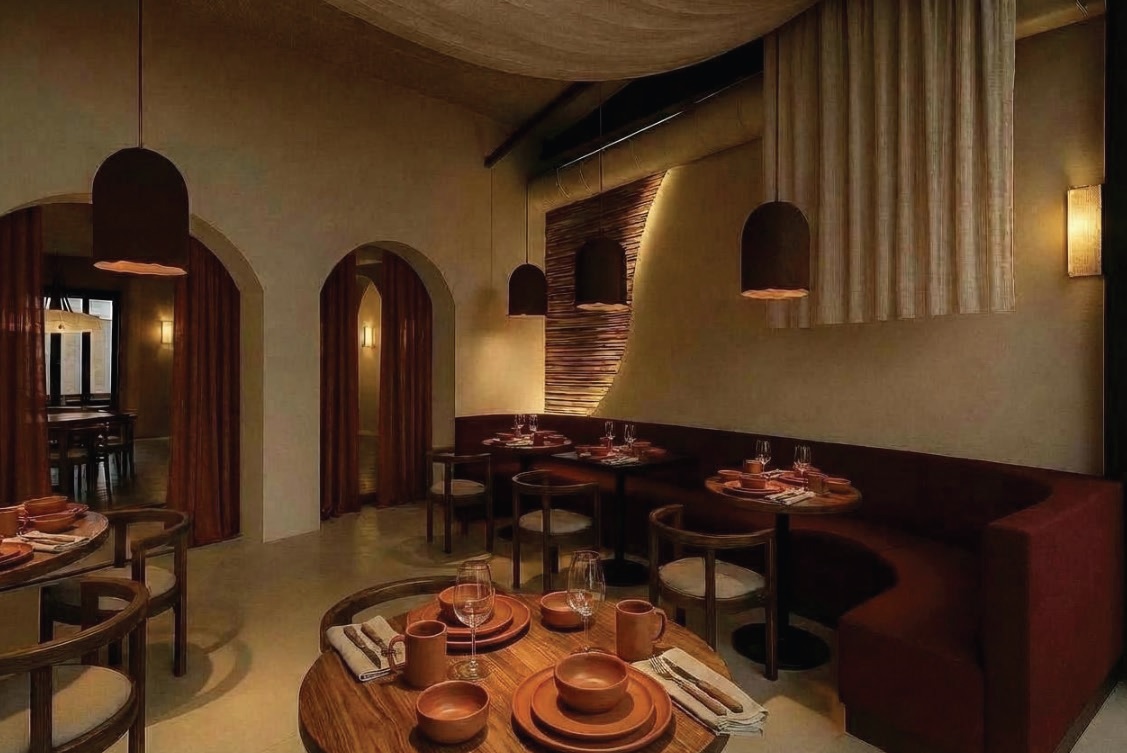
The design vocabulary reflects that reality: draped ivory linen ceilings, travertine stone, terracotta pendant lights, Cycladic-inspired arches. Everything from the furniture to the ceramics was custom-made in Greece specifically for Selene. It’s earth-driven Mediterranean design meeting SoHo minimalism. What distinguishes Selene isn’t just aesthetic. It’s structural. Ragonese frames it as filling a void in the market, the space between white-tablecloth formality and high-energy casualness. “There is fine dining, and ‘loud’ restaurants,” he says. “There is a gap here. We want good music, but we also want people who can have a conversation at the table.”
That middle ground extends to how the restaurant approaches the evening itself. Rather than separating dining from nightlife, Selene lets the night unfold organically. The soundscape evolves: warm and airy at the start, building into coastal-social dining energy as the hours progress. The same intentionality applies to the food. The underlying philosophy is about ingredients, a shift Christou sees happening across Greek restaurants in New York.
“This generation of Greek chefs is focusing on the Greek ingredients that already exist, unique products you don’t need to import from around the world,” he says. “Fava and capers from Santorini, Krokos from Kozani. Regional ingredients from our land, and of course, olive oil. The new wave is about genuineness, creating food that speaks to those ingredients.” The approach is 70 percent traditional, 30 percent playful, keeping the menu rooted in classics while leaving room for experimentation.
“I know that a lot of people are trying to do ‘too much’ with tradition, like the deconstructed spanakopita,” Christou says. “We can’t follow that.” The menu reflects this: whole grilled fish finished with lemon and oil, charcoal-kissed octopus, chilled crudos balanced with citrus and sea salt, and elevated Greek classics prepared with precision. An Aegean crudo bar showcases whole-fish preparations. Tableside rituals create moments of interaction. Ingredients treated with reverence, dishes built around clarity, brightness, balance.
But food, however excellent, is only part of the equation. Christou keeps returning to one word: philotimo, that untranslatable Greek concept encompassing honor, dignity, and pride in hospitality. But he’s less interested in defining it than demonstrating it. In a city with thousands of restaurants competing for attention, Christou believes hospitality is the differentiator. “I think that every restaurant in NYC needs to have good food,” he says. The competition is too fierce for anything less. “They have to have a price point ratio that makes sense. But what’s most important is how they’re treated when they come in. It’s a lost art today.”
That philosophy extends beyond service. In an era of delivery apps and home streaming, restaurants must justify the effort of leaving the house, which means creating an experience, not just a meal. “Why do people go out to eat?” Christou asks. “We want to be the reason that people get out of the house.” When Selene opens in early spring, it will test whether SoHo and New York are ready for Greek dining that refuses the binary of fine dining versus casual. Christou and Ragonese are betting that after nearly three decades of modern Greek restaurants in New York, there’s still room to evolve. The moon, after all, is always changing.
Selene By Kyma
23 Grand Street, New York, NY 10013
selenerestaurants.com
instagram.com/selenesoho