CAVA: Same Food, Bigger Table
Posted by estiator at 11 July, at 13 : 50 PM Print
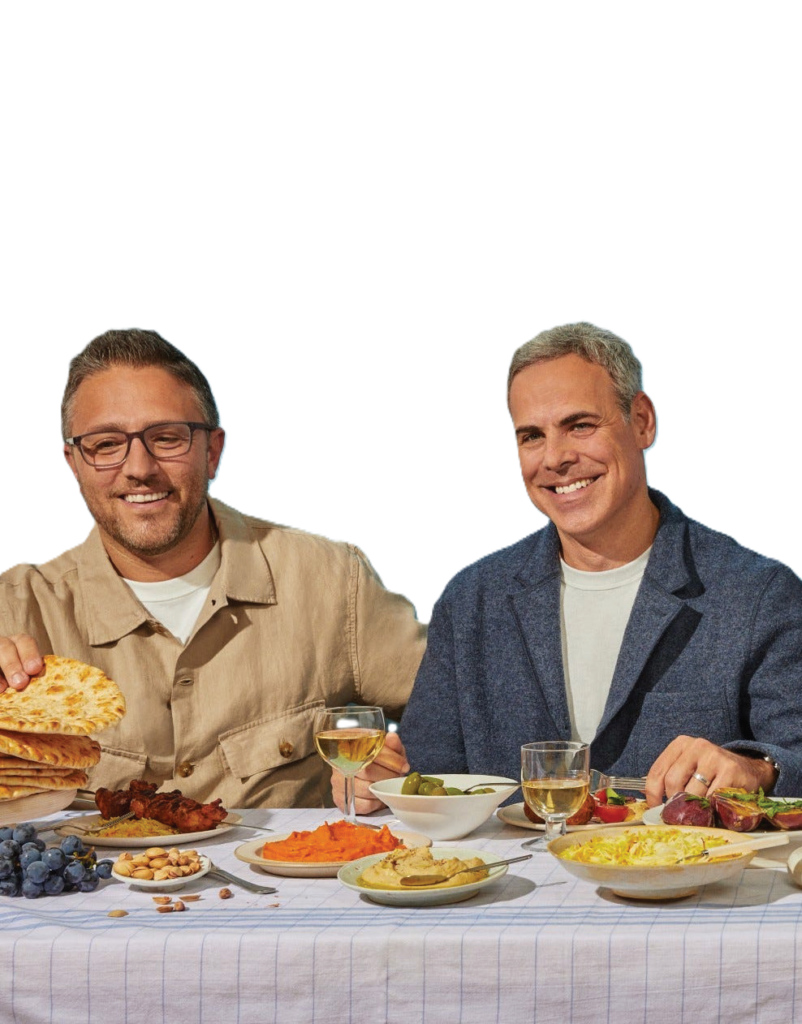
Cofounder Dimitri Moschovitis reflects on the national chain’s 15 years of success.
By Theodora Tsevas
A man in the next seat had planned ahead. Somewhere at 30,000 feet, he reached into his bag and pulled out lunch, a CAVA bowl, packed before boarding. Dimitri Moschovitis, cofounder of the company that made it, was sitting right beside him. They got to talking. Three hours passed.
For Moschovitis, it is exactly the kind of moment that makes 15 years feel worth it.
“They can go eat food wherever they want,” he says. “But they choose us.”
What began in 2006 as a 55-seat mezze restaurant in Rockville, Maryland, opened by three childhood friends—Ted Xenohristos, Ike Grigoropoulos, and Moschovitis, all of Greek-American roots and from the Washington, D.C., area—has become one of the most closely watched restaurant companies in the country, with more than 450 locations across 29 states and a market presence that has made “fast-casual Mediterranean” a category unto itself.
Moschovitis, the chef and cofounder, did not set out to build a category. He set out to cook the food he grew up with. “Back in 2006, we were just having fun cooking this food,” he says. “It wasn’t the ‘eating clean’ movement. It wasn’t a trend. It just came naturally to us.” The timing, he will admit, did not hurt. The Mediterranean diet has since claimed the top spot in nearly every nutrition ranking.
But the proof is in the details. Harissa, once an obscure Moroccan chili paste that Moschovitis insisted on putting on the table despite it being decidedly non-Greek, is now a word people throw around in grocery store aisles. Tzatziki went from “white sauce” to a pronunciation challenge with its own corner of the internet. “It is great to see that all the foods I loved growing up have become part of the culture today,” he says.
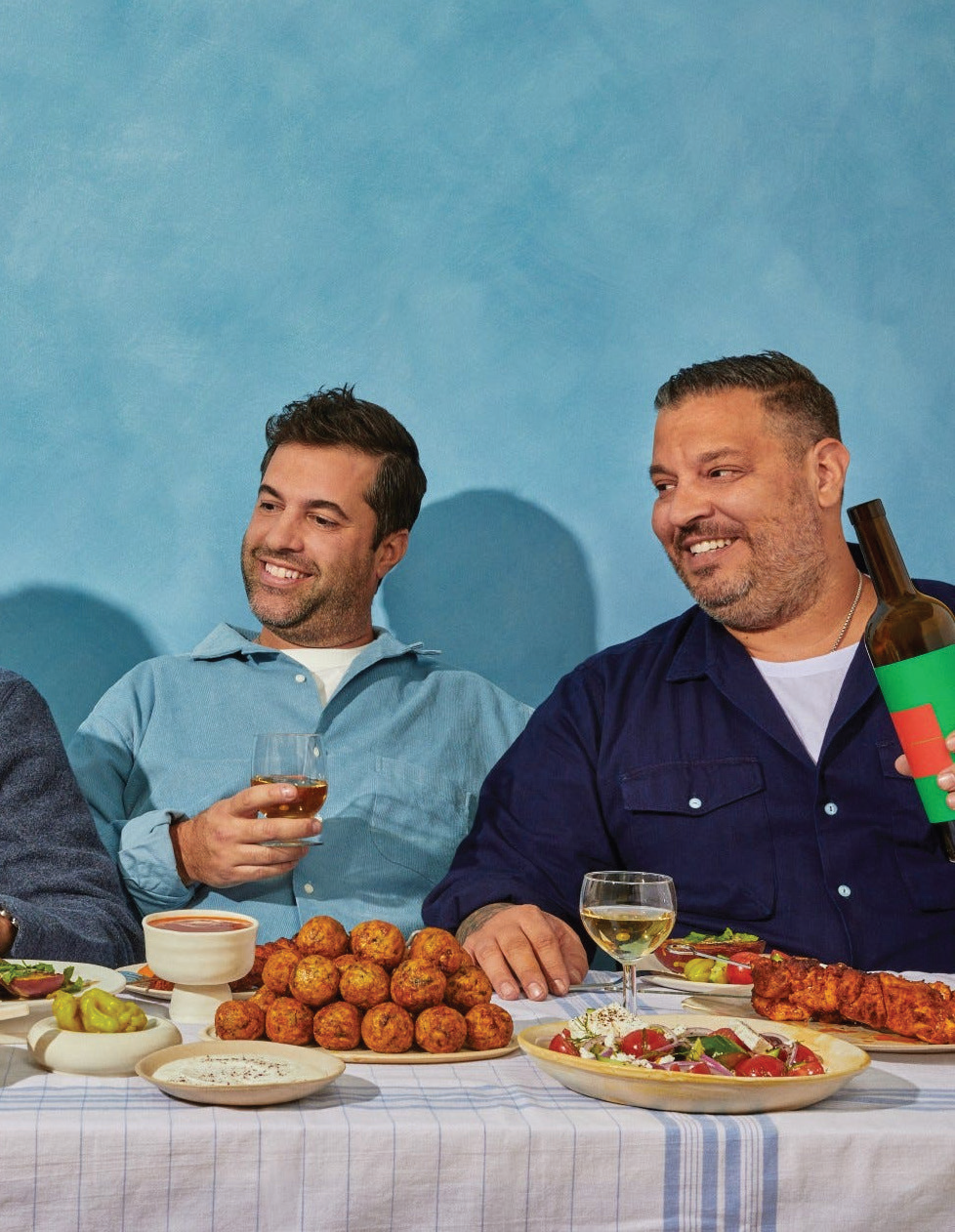
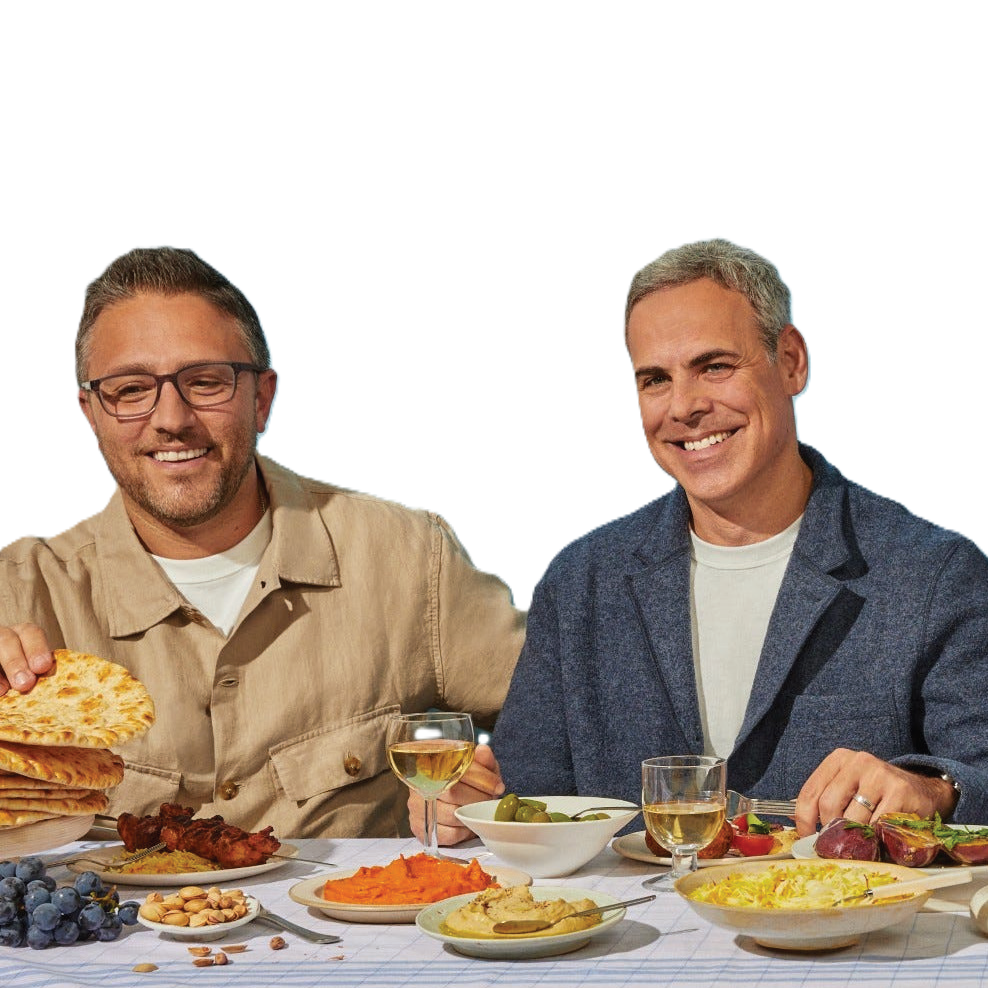
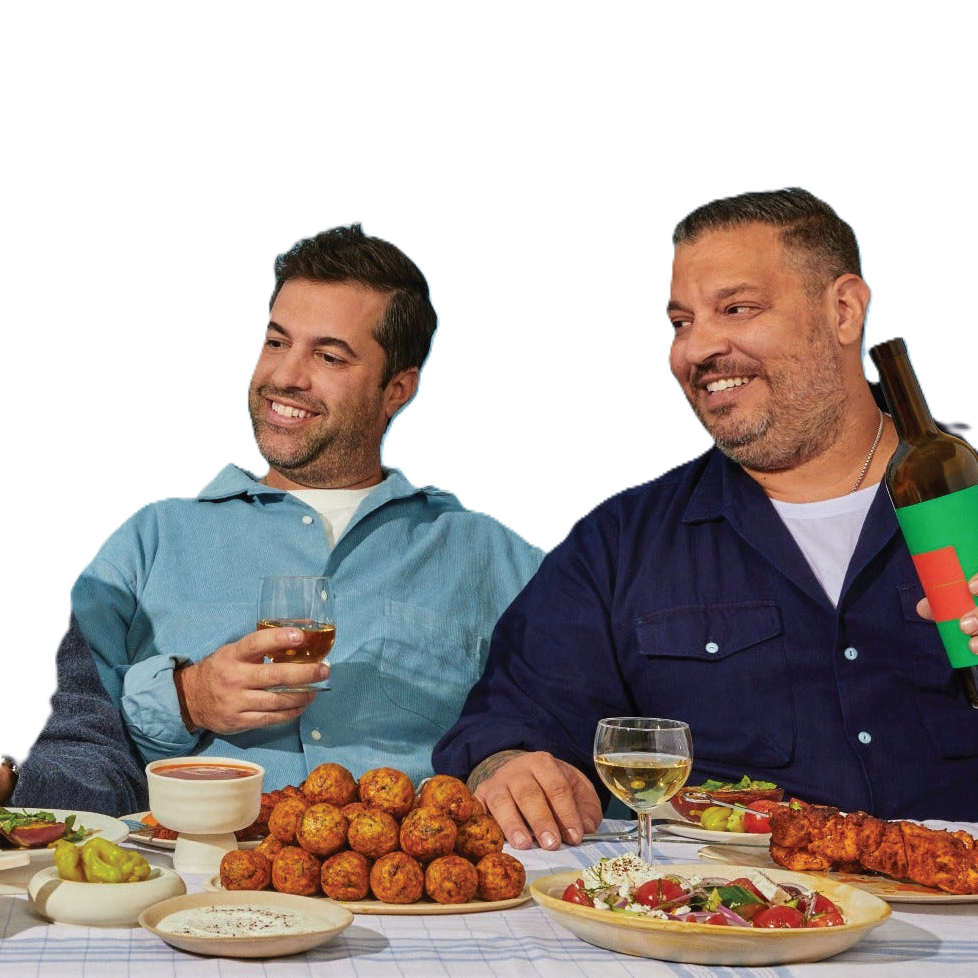
Ike Grigoropoulos, Brett Schulman, Ted Xenohristos, and Dimitri Moschovitis
Moschovitis is careful not to let the origin story become mythology. The early years were unglamorous in ways that tend to get airbrushed out of success narratives. Before CAVA was a national chain, it had a side hustle in dips and spreads, the same hummus and tzatziki customers kept asking to take home. The three cofounders would shut down Cava Mezze at night, go back into the kitchen, make the dips themselves, carry them out to the bar, hand-fill the containers, slap on stickers, weigh them, pack the cars, and drive to supermarkets before dawn. “We didn’t understand that business,” Moschovitis says. “We were just making dips.” That operation, exhausting, artisanal, and slightly chaotic, is now a 55,000-square-foot manufacturing facility in Virginia. That same tzatziki is just made in 10,000-pound batches.
The leap from one to the other happened when Brett Schulman came on board as a consultant, eventually becoming the fourth co-founder and CEO, as Moschovitis describes him, “a partner, a friend, and a mentor.” It was Schulman who asked the question that changed everything: How do we get this food to more people? The answer was a fast-casual line format, scalable by design, built around customization. The bowls. The assembly line. The model that would eventually require Moschovitis to do something that does not come naturally to any chef who has spent years in a kitchen: let go.
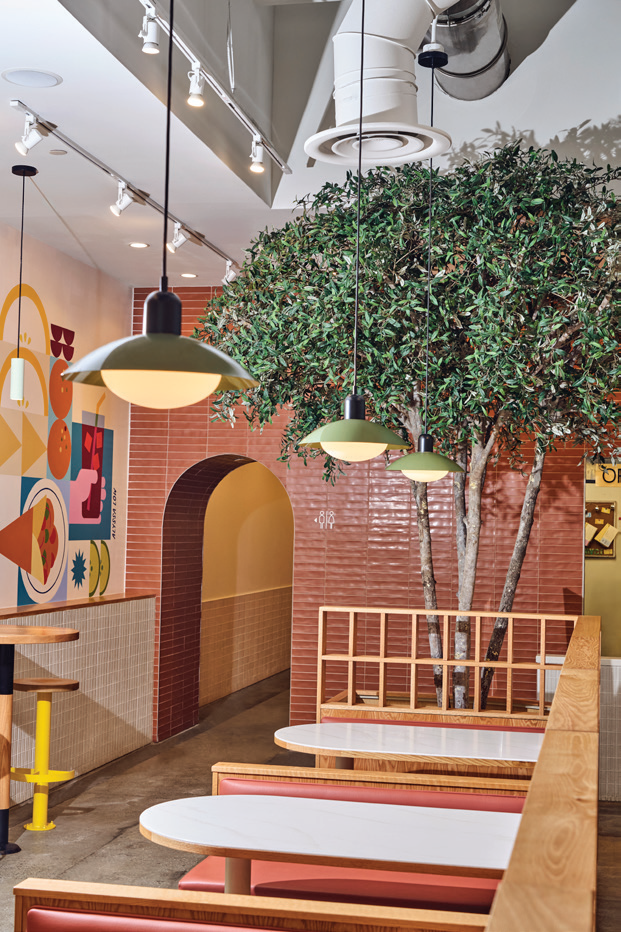
“Control,” he says, without hesitating, when asked what was hardest to surrender. “When you scale, that is something you have to let go of. You surround yourself with people that care, you teach them, you empower them. One of my favorite things to do is teach people. There is nothing more valuable than that.”
That lesson was learned first between the three founders themselves. Moschovitis, Xenohristos, and Grigoropoulos have known each other since childhood, long before there was a restaurant, a dip line, or a stock ticker. Keeping that intact through the pressures of scaling required something deliberate. “We check our egos at the door,” Moschovitis says. “We do not look at each other as business partners. We look at each other like family members.” They had watched other Greek family businesses, the kind built on the same immigrant drive and communal table, fall apart over disagreements that could have been talked through. They were determined not to become that story. “Someone has to let go,” he says. “We didn’t want to be that statistic.”
The original Cava Mezze in Rockville is still open, run by Moschovitis’ brother, still the place where everything else began. The Greek yogurt, the kalamata olives, the olive oil sourced from Greece, the “crazy” sauce made with authentic Greek feta, none of that changed when the address count climbed past 400. “We didn’t want to cut any of those corners,” he says. “Because that is our heritage, our culture.”
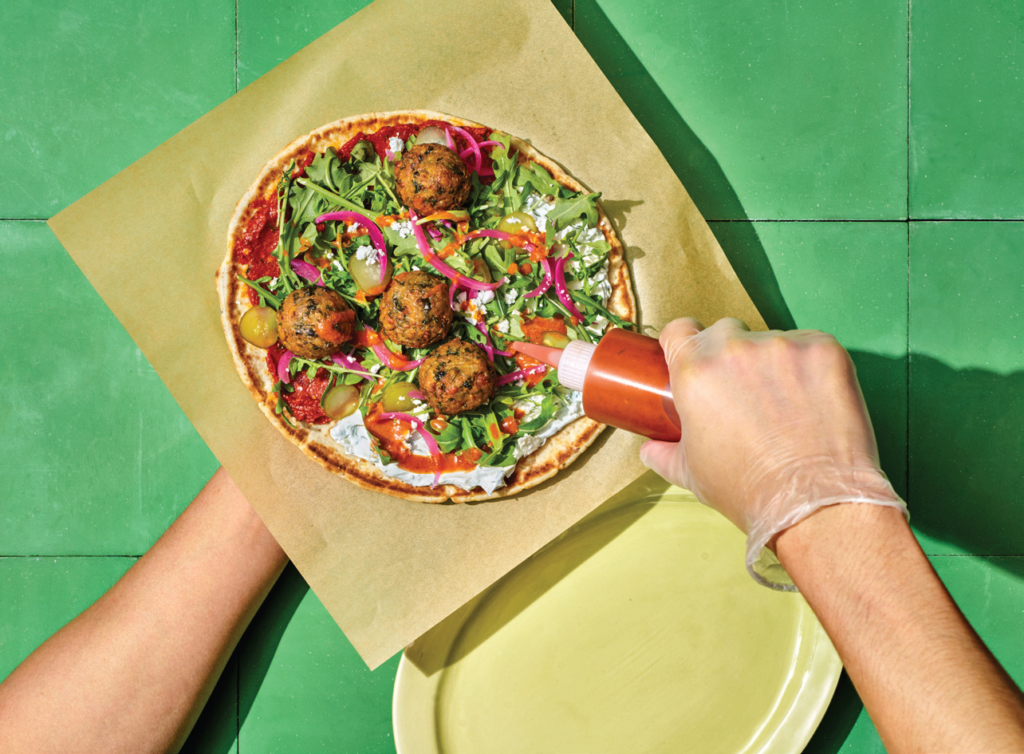
The same instinct extends to what happens before a new CAVA opens its doors to paying customers. The restaurant spends a day feeding the neighborhood for free, asking for donations to local nonprofits instead of payment. Moschovitis traces it back to something simpler: his grandmother’s village in Greece, where a new neighbor meant open doors and a full table. “When someone new would come to the neighborhood,” he says, “people would open up their homes, make all these meals, and just hang out.” The hospitality doesn’t stop at the ribbon-cutting. Inside every CAVA, team members have a “love button” on the register, a $0 credit they can apply at their own discretion, for the customer who looks like they’re having a tough day, or the regular they simply want to thank. The commitment doesn’t stop there. Food prepared during staff training goes straight to local food banks, nearly 43,000 meals donated in 2024 alone. The company has signed onto the U.S. Food Waste Pact, a national initiative backed by the World Wildlife Fund, and is piloting AI tools to forecast demand and cut overproduction. “It is an ongoing effort,” Moschovitis says.
Meanwhile, the map keeps expanding. America’s appetite, he says, has been changing in ways that go well beyond the coasts: “It’s not pizza, burgers, and wings anymore.” Mediterranean food is now part of the daily lives of people from Texas to the Midwest, in cities where it had no foothold a decade ago. CAVA currently operates in 73 locations in Texas alone. The goal is 1,000 locations by 2032, roughly 75 new restaurants a year. “As the company grew, our palates evolved,” Moschovitis says.
This year, CAVA will serve 100 million meals. For Moschovitis, every one of them is a vote and every customer who comes back is casting one.