A Spoonful of Authenticity
Posted by estiator at 13 May, at 21 : 12 PM Print
MADE IN GREECE
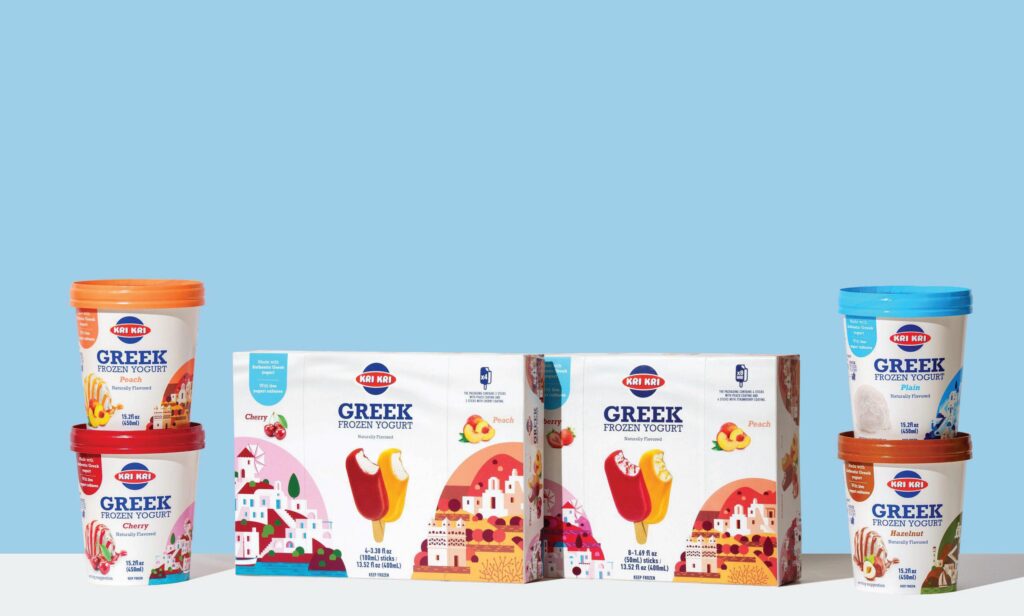
Walk into any American supermarket and you will find dozens of products labeled “Greek yogurt.” Virtually none of them are Greek. Kri Kri, a dairy company in northern Greece, has spent more than 70 years making the real thing. And it has brought a frozen version of it to America.
By Theodora Tsevas
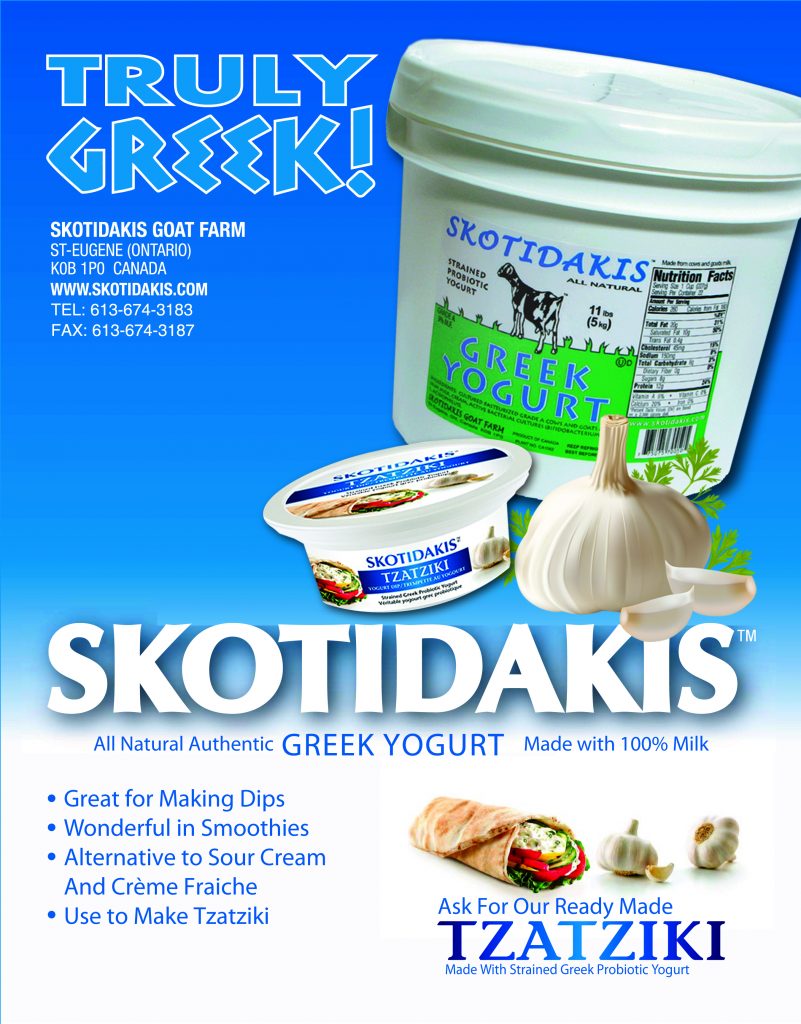
Dozens of products carry the word “Greek” on their labels in the yogurt aisle of an American grocery store. Most are made in the United States, from American milk, by companies with no connection to Greece. The term carries no protected designation of origin in the United States; it describes a texture, a production method, a marketing decision made thousands of miles from the Aegean. American and multinational dairy companies built a multibillion-dollar category on the back of an identity that was never theirs to claim.
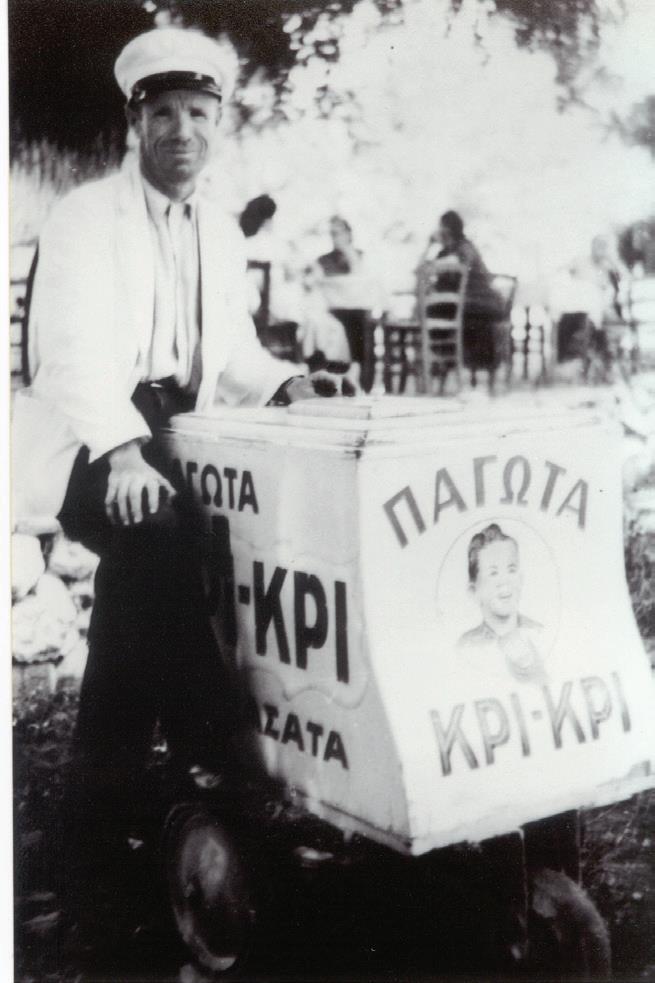
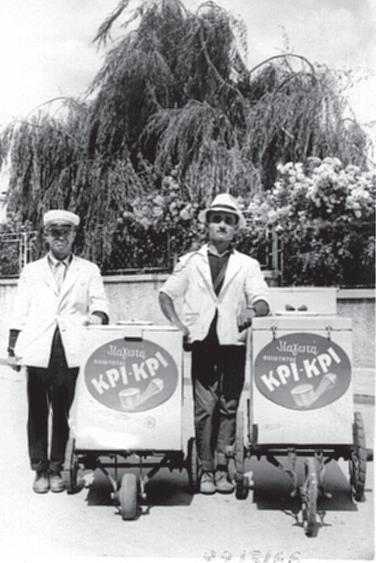
Greek company Kri Kri has been making dairy products in Serres, a city near the Bulgarian border, since 1954. Founded by Giorgos Tsinavos as a small artisan workshop producing sweets and ice cream, the company has grown across three generations into one of Greece’s most respected food exporters, shipping to more than 40 countries. Today, his son Panagiotis, the company’s president and chief executive, runs the business. The third generation of the family is already inside the building.
“Authentic Greek yogurt is yogurt produced in Greece, from Greek milk,” Panagiotis Tsinavos says. “That is our competitive advantage.” Now, with its Greek Frozen Yogurt already on shelves in U.S. supermarkets, Kri Kri is making its most direct challenge yet: that in a category defined by borrowed identity, the company that actually makes the thing has a story worth telling, and a product worth finding.
A name without a passport
The problem is structural, and it predates Kri Kri’s international ambitions. In the European Union, food labelling rules require that the term “Greek yogurt” indicate genuine Greek origin, but the name has never received formal protected geographical status, a designation Greece has been seeking for years without success. In the United States, no such rules apply at all. Any producer, anywhere, can label their product “Greek-style” or even “Greek yogurt” without any connection to Greece whatsoever. The result is a market where Greek identity has become a flavor rather than a fact.
For decades, European food producers have watched this dynamic play out across category after category. Greek yogurt, feta: terms fiercely protected within the European Union and largely unenforceable beyond it. The naming battle, in most cases, is already lost. Kri Kri’s answer is not to litigate it, but to outflank it: to make provenance so central to the product’s identity that the imitation becomes obviously beside the point.
“The ‘Greek’ identity shown on most packaging is more a product of marketing and a description of texture than proof of origin,” Tsinavos says. “The success of these products shows the dynamism of the category, and that is a positive thing.” The confusion they have created in the consumer’s mind, he argues, is precisely the opening Kri Kri intends to walk through.
The expansion
Scale is what makes it possible. The “Greek Yogurt Dynamo” program, a €52.2 million investment approved by the Greek government as a strategic initiative, is the operational expression of that ambition. It will modernize production through automation, add a biogas unit and circular economy infrastructure, and roughly double the company’s yogurt output when complete.
The company’s entry into the American market has been careful and, on the surface, counterintuitive. Rather than leading with strained yogurt, the product at the heart of the entire debate, Kri Kri chose its Greek Frozen Yogurt as its American beachhead, launching first in supermarkets across Texas. “It has a much longer shelf life, meaning it can reach distant markets more easily,” Tsinavos explains. The logic is cold-chain pragmatism: Ice cream travels in ways fresh dairy cannot. The product also threads a needle that strained yogurt cannot, appealing to Greek-American consumers through nostalgia and cultural memory, while offering the broader American market a premium dessert with a cleaner nutritional profile than conventional ice cream.
High protein, higher stakes
Back in Greece and across its European export markets, the company’s Super Spoon line, high-protein yogurt products that Kri Kri helped pioneer, offers a preview of where Tsinavos believes the broader category is heading. “We do not see high-protein products merely as a trend,” he says. “It is now the new normal.” In recent years, consumers across Europe and North America have increasingly sought foods that combine pleasure with functional health benefits, a shift that has reshaped dairy aisles and created a new tier of premium, nutritionally positioned products. Kri Kri has been building toward this moment for years.
The next wave, Tsinavos suggests, will go further still: lower sugar, targeted digestive support, nutritional profiles calibrated for specific lifestyles. “Our goal is not simply to follow market trends but to shape them.” It is the kind of claim that can sound like marketing until you consider that Kri Kri had a high-protein strained yogurt on Greek shelves years before the rest of the world had a word for it.
The third generation
Beneath all of it runs a quieter question: How does a family company carry its identity intact through more than 70 years of growth and now a push into the world’s most competitive food market? Tsinavos answers it the same way each time. “These values, production in Greece, quality raw materials, deep roots in the local community, are not simply heritage,” he says. “They are embedded in the way we operate.”
The family’s insistence on sourcing only same-day milk from farms in the Serres region is the most visible expression of this. Some might read it as a constraint on scale. Tsinavos reads it as the product’s entire argument. “We see it as an investment in the quality, freshness, and authenticity of our product.” To meet rising demand without compromising that commitment, Kri Kri has expanded its milk catchment zone to neighboring regional units and deepened its partnerships with local producers through Aristotle University of Thessaloniki.
That commitment has been tested before. On Christmas Eve 2013, a fire destroyed Kri Kri’s dairy factory entirely. By the following morning, Tsinavos had publicly committed to rebuilding. Within eight months, a new, modern facility was operational, with double the previous capacity. Not one employee had been let go. “We have chosen to remember it as a story of rebirth and strength,” he says, “not as a failure.”
It is that resilience, more than any product or program, that Tsinavos believes defines the company. The third generation now entering the company will inherit that instinct along with the balance sheet. In Serres, Tsinavos seems untroubled by the scale of what he is attempting: taking on a category that was built without him, in a market that never knew his name, with a product whose identity was borrowed so long ago that most American consumers have forgotten it was ever Greek. “The goal,” he says, “is not to stay the same but to evolve without losing your identity.” In Serres, at least, they appear to mean it.